Fort Bend County’s median house was built in 2005, and nearly a third of it went up between 2010 and 2019 with the builder’s base-tier system installed to a price. Those units are reaching the end of their first life now. Say what the system is doing — or just what year the house went up — and get connected with an independent, TDLR-licensed contractor working in the county.
Fort Bend AC Pros is a referral service. No mechanical work is performed here and none is offered. What this site does is put a Fort Bend County address in front of an independently licensed contracting company, which then quotes, carries out and warrants the job in its own name, on its own Texas Department of Licensing and Regulation license.
AC repair · Replacement and changeouts · Load calculations and sizing · Heating and furnace · Permits by city · All of Fort Bend County
Fort Bend County’s own building-codes page says it directly: “Fort Bend County has not adopted zoning ordinances and does not issue Certificates Of Occupancy.” A county verification letter goes further — “the County has not adopted building codes for single family residential developments.” Its list of what does need a permit out there covers floodplain work, driveways, platting and structures of 400 sq ft or more. There is no mechanical trigger on it at all.
Texas cities cannot enforce building codes or require permits in their extraterritorial jurisdiction — Town of Lakewood Village v. Bizios (Tex. 2016) for general-law cities, extended to home-rule cities by Collin County v. City of McKinney (2018). So a house in Cinco Ranch, Aliana, Harvest Green or Jordan Ranch is under unincorporated-county rules whatever the mailing address says. The city on the envelope is a postal routing decision, not a jurisdiction.
Equipment sized without a load calculation. Return-air undersizing. Condensate routing above a finished ceiling. Duct static pressure. Every one of those works perfectly on day one and decides how the system behaves for the next fifteen years. An oversized system blows cold air immediately — it just never dehumidifies, and it wears itself out doing it.
Air conditioning contracting is licensed by TDLR across the whole state, and Occupations Code §1302.251 does not care whether the property is in a city. What differs is enforcement: inside a city the permit is the moment somebody checks; outside one it is complaint-driven, which means after the fact. That is the honest reason to care who you hire out here. The city-by-city position →
Warm air at the vents, a breaker that will not stay in, a house that reads 73 and still feels wrong — or nothing at all except a 2013 Aliana build that has never had the equipment touched. Any of those is enough to start from.
An address in Missouri City and an address five minutes away in unincorporated county are different jobs with different permit answers and different travel times. Both matter.
An independently licensed air conditioning and refrigeration company that already works your side of the county. On an 885-square-mile map, who will actually come is a real question, not a formality.
On a replacement, it is the one document that says the equipment was chosen for your house rather than for the truck. Out here it is the only quality control there is.
Nearly a third of this county went up in one decade and a quarter of it predates 1990. Which group a house belongs to changes the answer more than the symptom does, so it is worth knowing which of these is yours before anyone is dispatched.
Base-tier equipment installed to a builder’s specification, everything under the roof the same age, and possibly a parts warranty nobody ever registered. Builder-grade systems and first replacement.
The equipment is newer than the house and newer than the ducts it was bolted onto. Replacing the box does not fix the return-air design it inherited. Duct repair and sealing.
The upstairs sits four or five degrees behind and always has. That is duct balance, return paths and sometimes zoning — three answers at three very different prices. Thermostats and zoning.
Repair-or-replace decided on turnover risk and capital treatment rather than on comfort, with access needing notice and a scheduled window. Stafford, the county’s rental city.
Nobody counted it when the house system was sized, and running duct out to it starves the house. Ductless mini-splits.
Richmond on the envelope, unincorporated county in law, and a permit answer that flips accordingly. AC permits in Fort Bend County.
A 2014 first failure, a 1980s third failure and an acreage system thirty miles out are three different repairs. Which one is yours.
The county’s two replacement waves, what a Houston-area changeout actually costs, and the seven things that belong in the quote.
Manual J, why oversizing is the default error here, and why outside a city nothing checks that it was ever done.
30.3% of the county went up in one decade with base-tier equipment. It is 7 to 16 years old now, and out of every warranty that mattered.
What counts as an emergency, what after-hours pricing looks like, and an honest word about distance across an 885-square-mile county.
One attic cabinet, two seasons, and a county where almost nobody inspects the gas side of the work.
One attic cabinet does both seasons, which is why a November no-heat call is rarely a furnace-only decision.
One machine, both seasons, no combustion and no heat exchanger to crack. What that changes at replacement.
R-22, R-410A and A2L, and the 2026 federal reversal most published content has still not caught up with.
ENERGY STAR puts typical duct losses at 20 to 30%. Long runs, wide plans, and a return side that is usually the real problem.
The cheapest month to get somebody out to Needville or Kendleton is not July. What a visit should actually cover.
A mean August dew point of 73.5°F, and why a house at 74°F can still feel wrong.
Large two-story west-county plans with one thermostat. What zoning does, and what it cannot fix.
Shops, garages, converted outbuildings and additions on acreage — and where a mini-split is the wrong answer.
Which cities require a mechanical permit and which require contractor registration — and why unincorporated county has neither.
There is no county answer to “what code applies” because the cities do not agree. Richmond runs the most current cycle here — the 2024 I-codes with the 2023 NEC. Missouri City is on the 2021 I-codes with the 2023 NEC and charges mechanical contractors $105 a year to register, expiring 30 September. Stafford is still on the 2015 ICC codes and the 2017 NEC under Ordinance 1110. Fulshear sits on the 2015 codes with the 2014 NEC. Rosenberg publishes an HVAC permit application but not its edition — that one has to be asked. A quote written from the wrong book is a quote written for the wrong address.
Census figures put 24.9% of Fort Bend County housing in 2000–2009 and 30.3% in 2010–2019, with a median year built of 2005 and just over 61% of the stock finished this century. That is two replacement cohorts rather than a gentle curve: the 2000s quarter is on its second system or overdue, and the 2010s third — nearly a hundred thousand homes — is entering first replacement now. Where a whole section went up in three years, its equipment reaches the end together.
Where a production builder puts up an entire section to one floor plan, the sizing tends to be done once and applied to all of it — including the elevation facing west behind a two-story wall of glass. Both the IRC (M1401.3) and the IECC (R403.7) require equipment to be sized from a calculated load, and inside a city the permit is the moment somebody could check that it was. Across most of this county there is no such moment. That is why the load calculation is the differentiator here rather than a technicality: outside a city line it is the only quality control the job ever gets.
Equipment manufactured from January 1, 2025 has to sit under a 700 GWP ceiling, which in practice means R-454B or R-32. A further restriction was to have closed off the installation of pre-2025 R-410A stock from January 1, 2026; that restriction is gone, withdrawn by a final rule published May 26, 2026 and effective the following 27 July. It is under challenge in the D.C. Circuit and remains in force meanwhile. Some states run their own timetable regardless — Texas does not have one, so nothing here overrides the federal position, and a working R-410A system is not stranded. The detail, and the litigation.
Commercial work in this county is concentrated where the residential work is not. Stafford alone carries the light-industrial and flex stock along the US 59 and Highway 90A frontage, with three-phase service, rooftop package units and switchgear rather than the split systems in a Fulshear cul-de-sac; the retail and medical strips run through Missouri City, Richmond and Rosenberg. Two things follow. Buildings on that side of the county are also the ones the county actually does regulate — the Fire Marshal issues Certificates of Compliance for certain multi-family and non-residential development, which is the one place unincorporated Fort Bend County does inspect something. And the schedule is a contract rather than a crisis: planned service intervals, tenant downtime measured in lost trading, and equipment on a roof that somebody has to be able to reach.
See commercial AC and HVAC →On a county site the first question about an address is not what is wrong with the system. It is whether anybody has ever looked at it. These pages are ordered by that answer — incorporated cities where a mechanical permit applies, then the unincorporated places and city ETJs where none does.
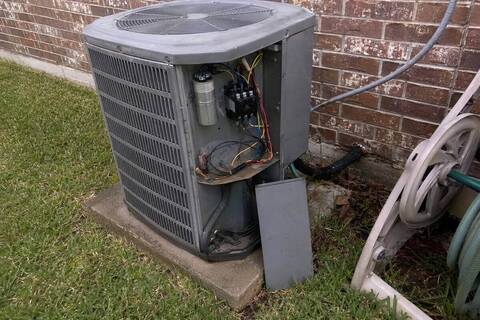
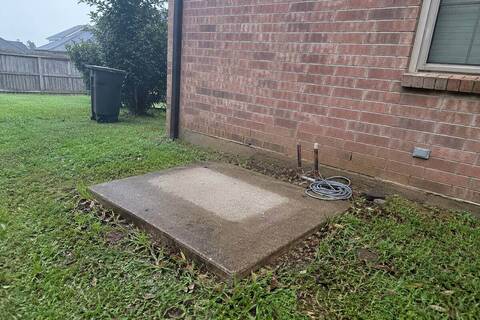
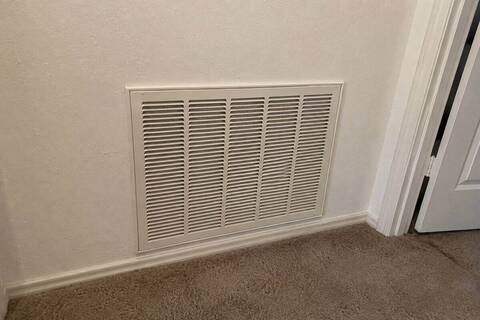
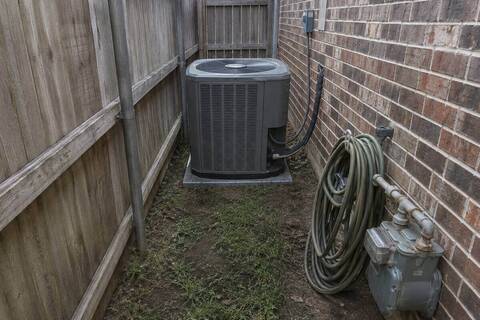
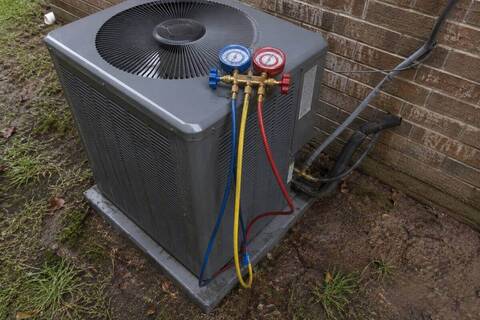
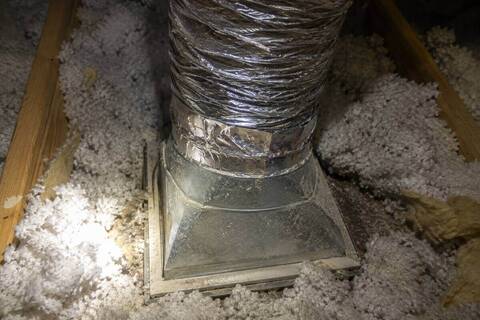
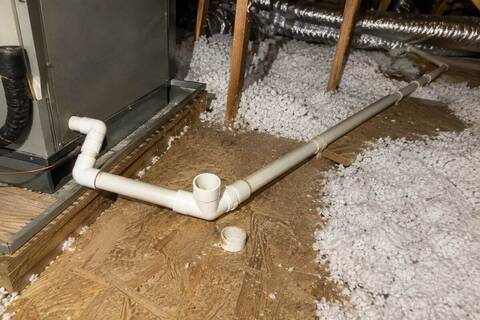
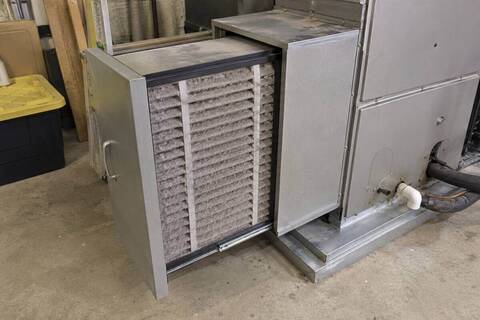
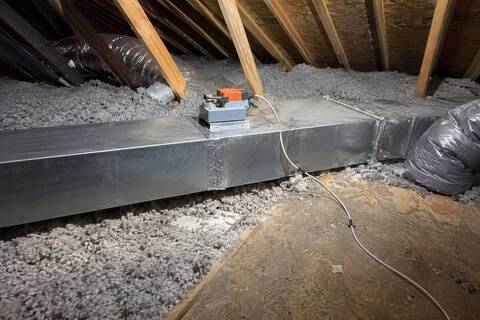
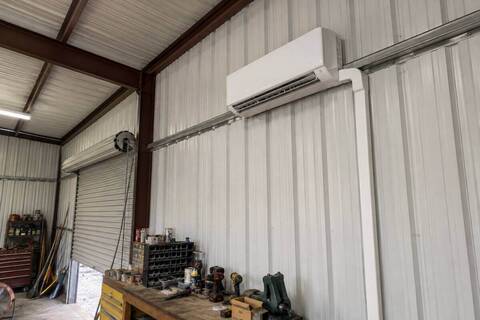
It depends entirely which side of a city line the property sits on, and the difference is larger than most people expect. In unincorporated Fort Bend County there is no county mechanical permit and no county mechanical inspection — the county has not adopted building codes for single-family residential development, and its own permit list has no mechanical trigger. Inside Missouri City, Needville, Meadows Place or Beasley there is one, and Missouri City additionally requires the contractor to be registered with the city. The city-by-city position.
No. A mailing address is a USPS routing decision and carries no jurisdictional meaning. Aliana and Harvest Green both carry Richmond mailing addresses and both sit in unincorporated Fort Bend County inside the City of Houston’s extraterritorial jurisdiction, where no city mechanical code applies. Texas cities cannot enforce building codes in their ETJ at all — Town of Lakewood Village v. Bizios (Tex. 2016), extended to home-rule cities by Collin County v. City of McKinney (2018).
No — it is the cohort arriving on time. Between 2010 and 2019 this county added 92,607 housing units, 30.3% of everything standing today (ACS 2020–2024, table B25034), nearly all of it with builder-specified base-tier equipment installed to a schedule. Those systems are now seven to sixteen years old and reaching first replacement together rather than one at a time. The practical consequence is local and slightly awkward: where a section went up inside a two-year window, its equipment did too, so a street can go from nobody having a problem to several changeouts in a single summer, and contractor availability tightens on that street at exactly the wrong moment. What the base tier skimped on.
Because temperature and humidity are two different jobs and the thermostat only controls one. Air conditioning removes moisture only while it runs, and an oversized system meets the setpoint in short bursts — so it never runs long enough to dehumidify, and some of what does condense evaporates back off the coil between cycles. With a mean August dew point of 73.5°F that is a very noticeable difference. The fix is not a colder setting or a bigger unit. See sizing and load calculations.
No. The rule that would have blocked installation of pre-2025 R-410A stock from the start of 2026 was withdrawn: a final rule published May 26, 2026 took effect that 27 July and lifted the installation deadline for systems whose specified components were manufactured or imported before January 1, 2025. If putting such equipment in is still permitted, keeping a working one certainly is. What survives is the 700 GWP ceiling and the January 1, 2025 manufacturing cutoff. A coalition challenged the withdrawal in the D.C. Circuit in late July 2026; no injunction was granted, so it governs while that runs. Texas adds no state refrigerant rule of its own. The detail.
Yes. The licensing requirement and the permit requirement are two separate things, and only one of them stops at a city line. under Occupations Code §1302.251 nobody may carry out air conditioning and refrigeration contracting, or hold themselves out as available to, without a license issued by the Texas Department of Licensing and Regulation — and the statute says nothing at all about where the property stands. So the rule is identical in Fulshear’s ETJ, on acreage outside Needville and on a Missouri City street with a registered contractor and a scheduled inspection. What differs is only whether anybody is positioned to notice a breach before something goes wrong. Ask for the company’s TACL number and run it through TDLR’s public license search, which is free. No such number appears on this site, because a referral service cannot lawfully hold or display one.
Three things regularly get reported to a mechanical contractor and turn out to belong elsewhere. Knowing which is which saves a diagnostic visit, and out toward the county edges it saves a whole afternoon:
A full duct replacement fills a driveway with torn flex, old boots and insulation, and an outbuilding conversion fills it with rather more. Roll-off containers sized for that, county-wide rather than city-anchored.
Where an upstairs bathroom shares an attic with the equipment, a stain overhead has two credible sources and only one of them is mechanical. Worth settling the supply side before a drain pan gets blamed for it.
By the time an unnoticed overflow has run for days, the mechanical fix is the smaller half of the job. Pulling the water back out is separate work with separate equipment.
Two facts narrow it faster than a description of the noise: what year the house went up, and which city — or which stretch of unincorporated county — it stands in. One call from there.
Call (346) 623-3250 Request a Quote Fort Bend