Home › Services › Heating and Furnace Repair
The heating load here is genuinely small. The service demand is not, because the same equipment that cooled the house all summer sits untouched until the first cold snap and is then asked for everything at once.
Houston Hobby recorded 961 heating degree days in 2025 against 4,099 cooling degree days. Against 1991–2020 normals of 1,098 heating and 3,362 cooling, 2025 was a warm year, but the shape does not change: the thermal heating load in Fort Bend County is a fraction of the cooling load, and it always will be.
What that number does not capture is that every residential system here provides heat as well as cooling — a gas furnace sharing the air handler and the ductwork with the air conditioning, or a heat pump using the same equipment for both. So the heating side is not a separate machine that gets used lightly. It is half of the machine that gets used constantly, and the half that sits.
The idleness is the failure mechanism. Seven to eight months without running is enough time for dust to settle on a flame sensor, for a hot-surface igniter to reach the end of a thermal-cycling life it has not been spending, for seals to stiffen, for thermostat calibration to drift, and for rodents to find a warm, sheltered burner compartment. None of it announces itself in September. All of it surfaces on the first night the thermostat calls for heat.
The consistently cited first casualty. Hot-surface igniters are brittle silicon carbide or nitride elements with a finite number of heat cycles, and they fail cold and without warning. A furnace that clicks, hums and then does nothing is usually here.
A thin rod that proves the burner lit by conducting a tiny current through the flame. A film of oxide from a season of sitting is enough to stop it, and the safety response is correct rather than faulty: the gas valve closes. The symptom is a furnace that lights for a few seconds and shuts down, repeatedly.
An attic burner compartment and a flue are attractive winter real estate, and in this county attics are how animals get around a house. Nesting material in a combustion chamber is a blocked-flue and fire question, not a cleaning one.
The draft inducer proves the flue is clear before the burner is allowed to light. A wasp nest in a flue termination, or a cracked hose to the pressure switch, produces a furnace that starts its sequence and gives up.
Genuinely common, genuinely worth checking first, and the one item on this list that costs nothing.
The one that matters. Invisible until the system runs in heat mode, and a combustion-gas path into the supply air. See below.
A gas furnace keeps combustion gases on one side of a metal wall and the air that goes into the house on the other. That wall is the heat exchanger, and thermal cycling over many years can crack it. When it does, combustion products — including carbon monoxide — can enter the supply air. The US Environmental Protection Agency lists “cracked furnace heat exchangers” directly among the sources of combustion products in a home.
Two things make this a Fort Bend County problem in particular. It is completely undetectable in September, because nothing is burning; it needs somebody to put the system into heat mode and watch what happens, which almost nobody in Houston does before the cold arrives. And carbon monoxide has no smell, so the failure has no warning of its own.
Working CO alarms on every sleeping level are the non-negotiable part, and they are cheap. A heating check before the first cold night is the part that costs an appointment. See maintenance and tune-ups, and if a furnace is condemned for a cracked exchanger, furnace replacement covers what that decision involves.
Houston’s first genuinely cold night usually lands somewhere between late October and late November. The demand pulse follows it by about a day, which is the single most predictable event in this trade’s local calendar — and the least convenient time to discover a problem, because everybody discovers theirs on the same night.
An October check is not a distress purchase. It is the one appointment in the heating year that can be scheduled at a normal rate, on a chosen day, with time to get a second opinion if the answer is expensive. That is the whole argument, and it is a scheduling argument rather than a safety scare — although the carbon monoxide point above is why the safety version is also true.
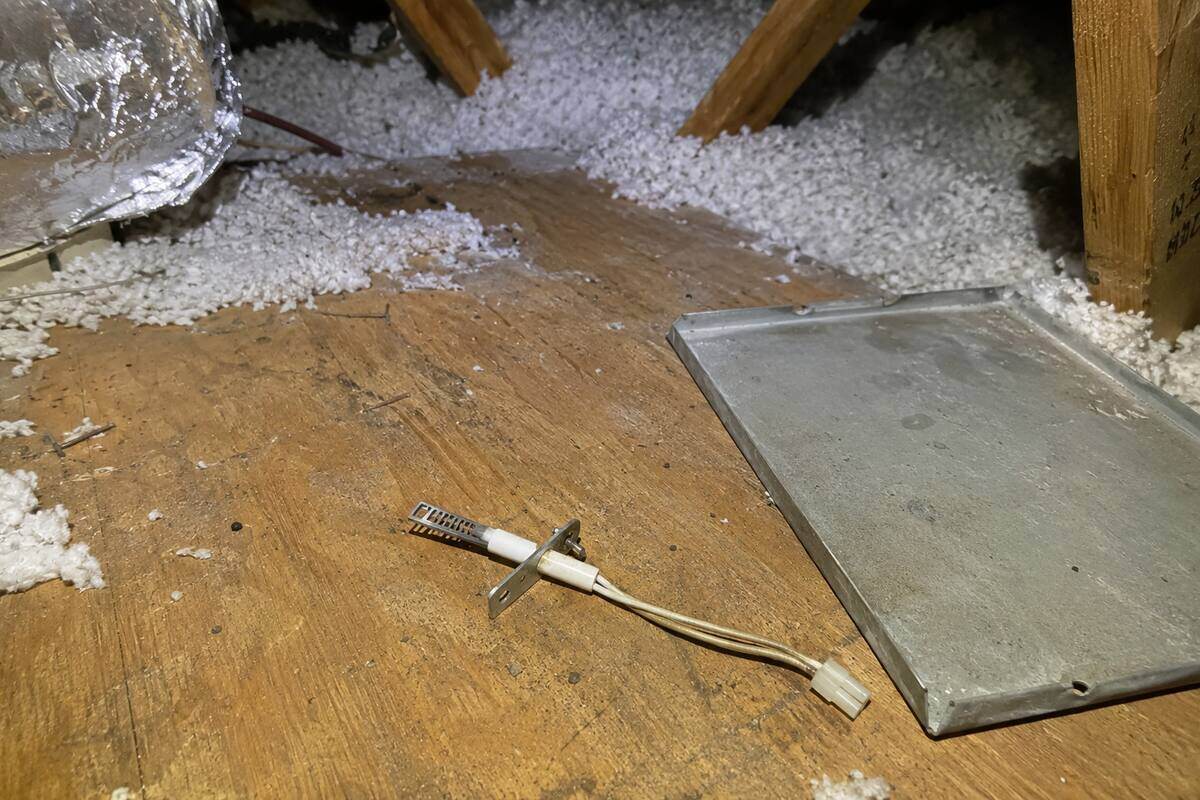
Because that is the first time in seven or eight months it has been asked to do anything. Ignition assemblies degrade while sitting, oxide films build on flame sensors, seals stiffen, and debris and nesting material accumulate in burner compartments and flues. None of it is detectable while the system is idle, so the failure and the first demand for heat arrive together.
Most often a flame sensor. The sensor proves the burner actually lit by conducting a very small current through the flame; a film of oxide on the rod interrupts that signal, and the control board responds correctly by closing the gas valve. It presents as a repeating cycle of light-then-stop. It is a small job, but it is a licensed one because it sits on the gas side.
It is the one failure on a gas furnace that is a health risk rather than a comfort problem. The heat exchanger separates combustion gases from the air that goes into the house, and a crack lets combustion products — carbon monoxide among them — into the supply air. EPA lists cracked furnace heat exchangers among household sources of combustion products. It cannot be seen or smelled, which is why working carbon monoxide alarms on every sleeping level matter regardless of the furnace's age.
The heating load is small — Houston Hobby logged 961 heating degree days in 2025 against 4,099 cooling. But the failure rate is not driven by load, it is driven by idleness, and the specific failures that idleness causes are the ones a homeowner cannot see. An October check is also the only heating appointment in the year that can be made at a normal rate on a chosen day.
Yes, and it is a regional pattern rather than a curiosity. Houses here are slab-on-grade, so the equipment goes in the attic, and the attic is how animals move around a house — usually in through a soffit or fascia gap. A sheltered, warm burner compartment and an unused flue are attractive winter sites. Nesting material in a combustion chamber is a flue-blockage and fire question, not a cleaning one.
It is the most predictable service call of the Fort Bend County year. Get connected with an independent, licensed contractor who works both sides of the system.
Call (346) 623-3250 Request a Quote Fort Bend