Home › Services › Heat Pump Systems
A heat pump is an air conditioner that can run backwards. In a climate with 961 heating degree days and 4,099 cooling, that is close to the case the technology was designed for — and it changes what a replacement conversation looks like.
An air conditioner moves heat from inside a house to outside it. A heat pump is the same machine with a reversing valve, so in winter it moves heat the other way — from outdoor air, even cold outdoor air, into the house. It does not make heat by burning anything, which is why its efficiency is expressed as a ratio greater than one: it moves several units of heat for every unit of electricity, rather than converting one into one.
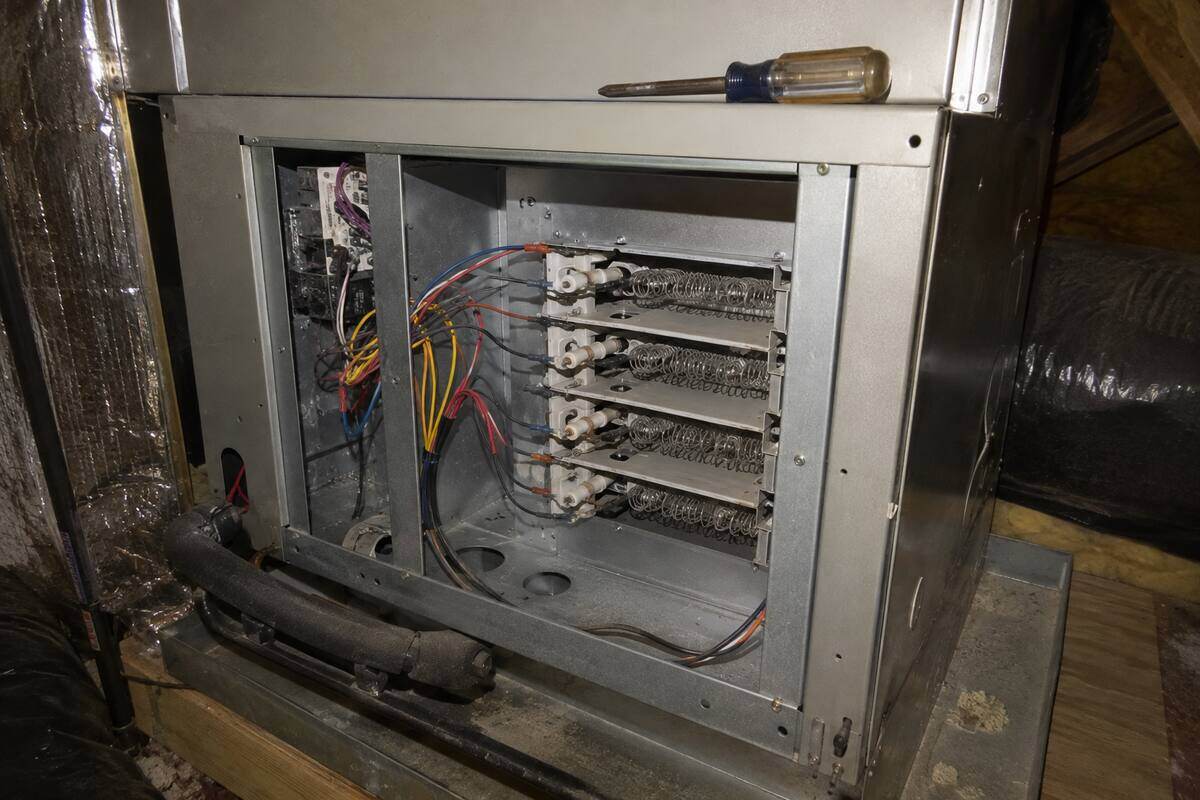
Practically, that means no gas line, no combustion air, no flue, and no heat exchanger to crack. The whole cracked-heat-exchanger and carbon-monoxide category described on the heating and furnace repair page simply does not exist on a heat pump. It has its own failure modes instead — a reversing valve, a defrost control, and an electric resistance heat strip that is the backup rather than the primary source.
The other structural difference is that the whole system is one purchase. A conventional split system is a condenser and a furnace-plus-coil, aging on two different clocks. A heat pump is one outdoor unit and one air handler, and they get replaced together.
This is the part people notice and it is worth knowing in advance rather than discovering it. A gas furnace delivers air at something like 120 to 140°F, in relatively short bursts. A heat pump delivers air nearer 90 to 100°F, for much longer. That is warmer than skin, so the house heats perfectly well — but air from a supply register that is warm rather than hot reads as “it is blowing cold” to somebody standing under it who is used to a furnace.
Two consequences. Long run times are correct behavior on a heat pump, not a fault. And the auxiliary heat strip is a backup, not a setting — it is straight electric resistance and it is expensive to run, so a system that engages it routinely rather than on the coldest mornings usually has a control or a charge problem rather than a capacity one.
The defrost cycle is the third thing people ask about. On a damp night near freezing, frost forms on the outdoor coil, and the unit periodically reverses briefly to melt it. Steam off the outdoor unit on a cold morning is the system working, not failing.
Worth being careful here, because the headline numbers in circulation do not say what they are often used to say. NAHB’s analysis of the Census Survey of Construction found that 47% of new single-family homes completed in 2024 nationally used a heat pump, up from 23% in 2000 — with very high shares in the South Atlantic (82%) and East South Central (77%) divisions and single-digit shares in the Midwest.
Texas is in neither of those divisions. It sits in West South Central, and no published figure for that division surfaced in the same analysis. Texas also has abundant cheap natural gas and a much stronger gas-furnace tradition than Florida or the Carolinas, so transferring an 82% South Atlantic share onto a Fort Bend County subdivision would be guessing. What can be said honestly is that heat-pump adoption in new Southern construction has risen sharply over two decades, that all-electric master-planned sections do exist in this county, and that the reliable way to know what is on your own pad is the data plate on it.
A quick field test: if there is no gas line running to the indoor unit and no flue leaving the attic, and the outdoor unit runs in winter, it is a heat pump.
Heat strips draw serious current. Replacing a heat pump is one of the few HVAC jobs where the panel and the circuit are a live part of the conversation rather than a formality.
Sized for the cooling load, as it should be in this climate, the heating capacity follows. A load calculation covering both is the deliverable. See sizing and load calculations.
New equipment is mostly A2L. R-410A heat pumps built before 2025 remain installable under the current federal position. The detail.
Long, low-temperature run times only work if the air can move. A restricted duct system that a furnace tolerated will make a heat pump feel weak. See duct repair and sealing.
A heat pump with a gas furnace as the backup instead of heat strips, switching at a set outdoor temperature. It costs more up front and is rarely necessary this far south, but it exists.
Simpler than a split-brand pairing, and one fewer registration deadline to miss. The 2007 NAHB life-expectancy study put heat pumps at 16 years against 10 to 15 for air conditioners.
If there is no gas line running to the indoor unit and no flue pipe leaving the attic, and the outdoor unit runs when the thermostat calls for heat in winter, it is a heat pump. A conventional system's outdoor unit sits idle all winter. The data plate on the outdoor unit settles it either way.
Because it is cooler than furnace air, and that is normal. A heat pump delivers supply air around 90 to 100°F where a gas furnace delivers 120 to 140°F. Ninety-degree air is warmer than skin and heats the house perfectly well, but it reads as cold to somebody standing under a register expecting furnace heat. Longer run times at a lower temperature is how the machine is designed to work.
Electric resistance heat strips in the air handler, there as backup for the coldest conditions and for defrost cycles. They are straight resistance heating, so they cost several times what the heat pump costs to run. A system engaging them routinely rather than on genuinely cold mornings usually has a control, charge or airflow problem rather than a capacity one — and 'emergency heat' on a thermostat means exactly that, not 'extra warm'.
Nationally, 47% of new single-family homes completed in 2024 used one, per NAHB's analysis of the Census Survey of Construction, and the share in the South Atlantic and East South Central divisions is far higher. Texas is in neither of those divisions and no published West South Central figure was available, so a specific local share would be a guess. Texas's cheap natural gas keeps gas furnaces common here. The data plate on your own outdoor unit is the reliable answer.
The 2007 NAHB study of home component life expectancy put heat pumps at 16 years against 10 to 15 for air conditioners, which is counter-intuitive given that a heat pump runs in both seasons. Treat both figures as national averages across all climates; Fort Bend County runtime pushes real outcomes toward the short end of any of them.
Whether a heat pump suits the house depends on the ductwork and the electrical service as much as on the climate. Get connected with an independent licensed contractor in Fort Bend County.
Call (346) 623-3250 Request a Quote Fort Bend